
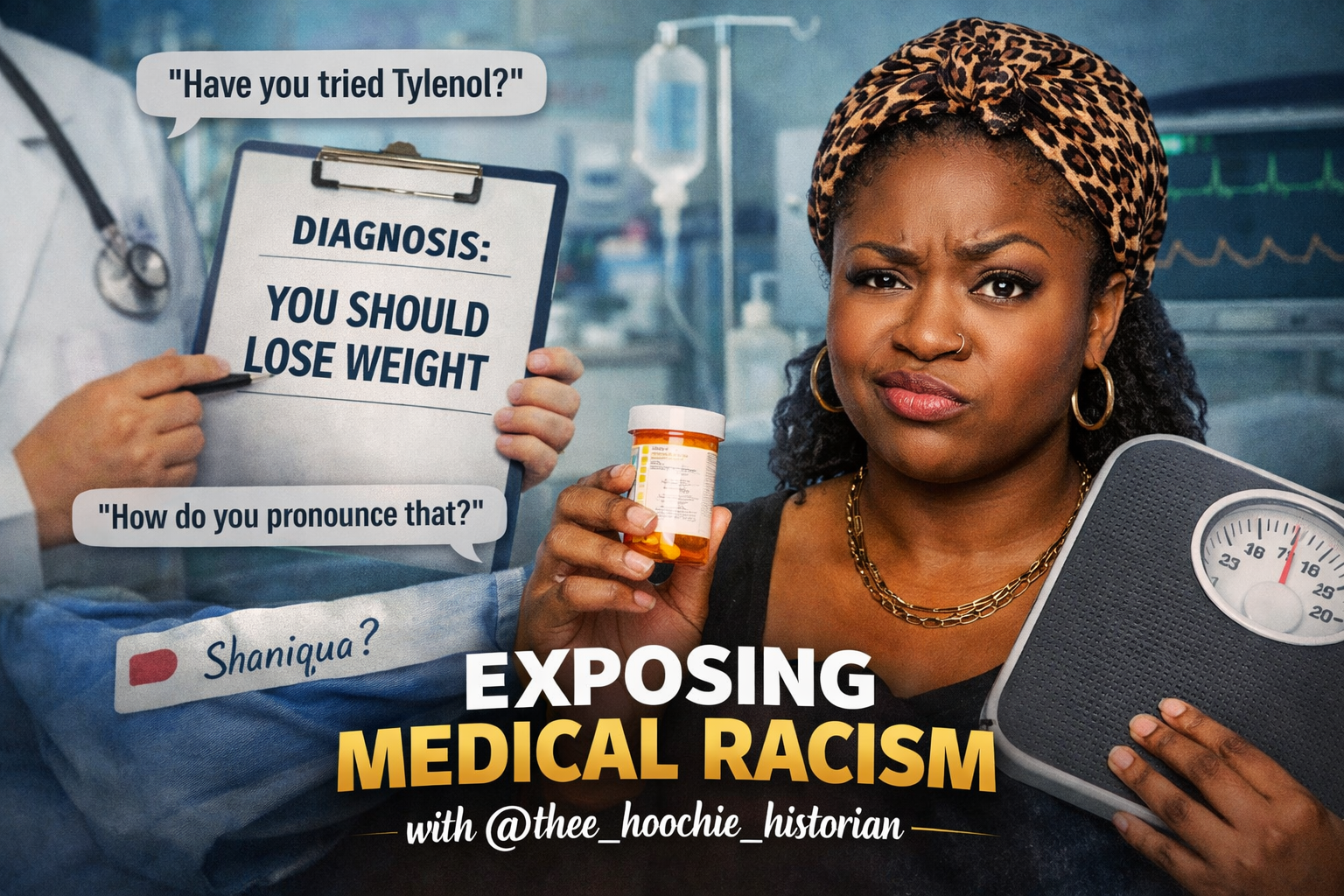
Walking into a doctor’s office is supposed to feel like a step toward care. For many Black women, it feels more like stepping onto a stage where we’re cast in a role we didn’t audition for: dramatic, aggressive, noncompliant, or everyone’s favorite diagnosis—overweight.
Creator @thee_hoochie_historian_ uses satire to tell this story with biting accuracy, turning everyday medical encounters into skits that are funny until you realize you’ve lived them. Her content doesn’t exaggerate reality…it mirrors it.
Pain, But Make It Invisible
In her videos, Black women describe pain plainly. Calmly. Clearly. The response?
- “Have you tried Tylenol?”
Translation: We don’t believe you.
Black women are statistically less likely to receive pain medication, even when presenting with the same symptoms as white patients. In satire, @thee_hoochie_historian_ captures this by showing doctors treating Black women’s pain like an inconvenience rather than a medical concern…something to be managed with deep breaths instead of medicine.
The joke lands because it’s true. The laugh catches in your throat because it hurts.
Every Diagnosis Leads to Weight Loss
Headache?
“Lose weight.”
Fatigue?
“Lose weight.”
Broken leg?
“Well… losing weight would help.”
In her skits, weight becomes the universal explanation and no tests required. The scale speaks louder than symptoms. The body is reduced to numbers, and the person inside it disappears.
What satire exposes here is the laziness of bias. Weight is used as a shortcut diagnosis, especially for Black women, whose bodies are already over-scrutinized and under-cared for. Instead of investigation, there’s assumption. Instead of treatment, there’s shame. Instead of humanity, there is fat phobia!
Aggressive for Asking Questions
One of the sharpest themes in @thee_hoochie_historian_’s work is how Black women are perceived the moment they advocate for themselves.
Ask for clarification?
You’re hostile.
Question a treatment plan?
You’re difficult.
Express frustration after being dismissed?
You’re aggressive.
The message is clear: compliance is expected. Curiosity is punished.
“How Do You Pronounce That?”
Then there are the microaggressions—small, sharp, and constant.
The mispronounced names followed by a joke.
The raised eyebrows at “baby daddies.”
The assumptions about education, income, and lifestyle that seep into conversations meant to be clinical.
In @thee_hoochie_historian’s satire, these moments are blink-and-you-miss-them lines that hit hardest because of their familiarity. They aren’t dramatic acts of racism. They’re the quiet ones—the kind that make you question whether you’re overreacting while knowing exactly what just happened.
Humor as Survival, Satire as Resistance
What makes @thee_hoochie_historian_’s content powerful isn’t just that it’s funny—it’s that it’s strategic. Satire allows her to say what many Black women have been taught to swallow. It invites laughter, then demands reflection.
By exaggerating the script of medical bias, she exposes how absurd—and dangerous—it is. Her work reminds us that these experiences aren’t isolated incidents; they’re patterns. Cultural. Systemic. Deadly.
Black women are not statistics, stereotypes, or symptoms. We are human beings who deserve to be believed, treated, and healed.
And if it takes satire to make that undeniable, @thee_hoochie_historian_ is more than up to the task.